


The Siege
Outnumbered. Outgunned. Unyielding.
† - Denotes a Resident of Laurel Hill Cemetery
There is a historical site in Philadelphia that played a very crucial role in the American Revolution. The role was so crucial that it is believed that if it had not been for this site, we would not have won our independence. Therefore, it is recognized as the site that "Saved America". It's not the Betsy Ross house, it's not the Liberty Bell, it's not even Independence Hall. This site sits just about six miles southwest of Independence Hall. It is so far off the beaten path of Philadelphia's Historic District that even the government, which owns it, has forgotten about it.
Well, maybe you can say that because it is off the beaten path, no one travels near it. Nothing could be farther from the truth. Every day, roughly 200,000 people drive right past it on Interstate-95, while tens of thousands of airline passengers fly directly over it while arriving or departing from Philadelphia International Airport. Those people pass it every day without stopping to find out what it is.
Photo by Keith J. Fisher
So what site holds such respect and honor from those who know what it is and why it is so important? It is the only remaining intact American Revolutionary War battlefield in Philadelphia. In terms of historic sites, this is the ultimate underdog in a city widely known as the underdog.
I know you're saying that if it was so important to the American cause, then how come most people have never heard of it? That is a result of it being left out of the narrative while teaching The American Revolution in schools. While some schools support field trips to it, most of them prefer the sites of the Historic District. However, it is a lot easier to navigate a school bus here, where there is an absence of the congested traffic of the city.
I know not everyone is on the list who has never heard of it or even been there. Those of us who have, we are truly the lucky ones. We know about this hidden gem that is so rich with history that you can literally feel it on the walls, and yes, you are allowed to touch them.
Scars By Keith J. Fisher
Part of The Fort Mifflin Collection
For those of us lucky enough to have a special place in our hearts for this sacred ground, treat this as a nostalgic reminder to visit it again after what you are about to read. For those who have not visited or even heard of it, please allow me to take you on a journey through the years when this place had the largest impact on our lives.
Welcome to Fort Mifflin.
The Lone Survivor By Keith J. Fisher
Part of The Fort Mifflin Collection
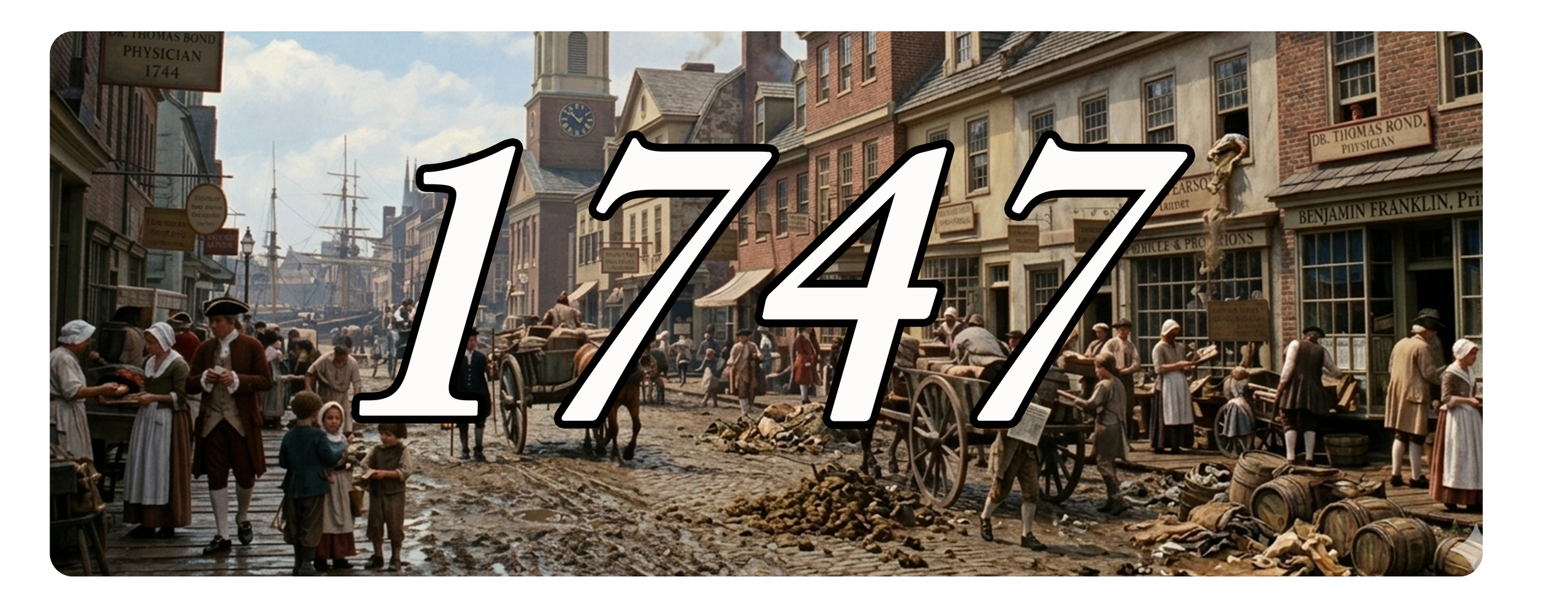
Before we even open our eyes, our nostrils are filled with a very rank odor that we are not used to in modern Philadelphia. We open our eyes to determine the source of the foul smell. That's when we discover there is not a single source of the odor, but rather a variety of ingredients adding to the mix. The odors are coming from the horses, the households, and the docks of the Philadelphia port. On occasion, we may get a whiff of a pleasant smell, like food being cooked as well.
Then we take our first steps through the rough, unpaved street made of dirt and gravel, carefully trying to avoid the muddy pockets. Wanting to get some information about where and when we are, we begin to look for a print shop to buy a newspaper. There are two newspapers to choose from, and both shops are located around Market Street. There is The Pennsylvania Journal, printed by William Bradford (1719-1791†). However, I think we will go with the more popular The Pennsylvania Gazette, printed by Benjamin Franklin (1706-1790).
By the masthead, we know today is Thursday, April 2, 1747. Reading the paper, we see that the major story is King George's War breaking out in February. Now, the war is raging in Europe between Britain, France, and Spain. As Philadelphia is the largest port in North America, it is the busiest, and that makes it a tempting target for enemies. All along the Atlantic coast, French and Spanish privateers are capturing British merchant vessels. Any merchant ships traveling through the Delaware Bay are in danger of being overtaken. A wave of fear rises that this could lead to French and Spanish ships entering the Delaware River, threatening the bustling Philadelphia economy. The public anxiety only heightens with fast-spreading rumors of enemy vessels near the coast.
While surrounding colonies have organized defenses, Pennsylvania has little if any organized militia. The Pennsylvania Assembly is influenced by its large Quaker community with its practices of pacifism. They are strongly against raising troops or money for a military. This keeps Pennsylvania vulnerable to attack.
This will lead us back to everybody's friend, Benjamin Franklin. After all, he is one of the most influential men right now. Mr. Franklin sees that this can endanger everyone, despite their religious beliefs. On November 17, 1747, Franklin prints a pamphlet entitled Plain Truth, in which he writes:
Benjamin Franklin
(1706-1790)
"Our Wealth, of late Years much encreas’d, is one strong Temptation, our defenceless State another, to induce an Enemy to attack us"
~ Benjamin Franklin, Plain Truth (1747)
Franklin influences the community to not rely solely on the Royal Navy. That we have the right and responsibility to defend ourselves. This pamphlet hits the exact tone that Franklin is aiming for. As a result, thousands of men volunteer. The community raises funds for arms and artillery. Fundraising efforts for military supplies are organized by women. All along the Delaware waterfront, temporary defensive batteries are built. It becomes commonplace to have training exercises around Philadelphia.
The newly formed militia, known as The Associators, has grown to 10,000 strong in early 1748. Franklin's concerns about the Delaware being in danger of bringing enemies into Philadelphia open the idea that our water passages must be defended.
In 1754, the French and Indian War breaks out and creates new interest in building a permanent defense structure along the Delaware to protect Philadelphia. Although plans are drawn up for a fort on Mud Island, the fort is never constructed.
With the Philadelphia port being the busiest and most important one, the locals begin to protest the economic policies and imports imposed by the British. Pennsylvania governor John Penn (1729-1795) reacts in early 1771 by requesting General Thomas Gage (1718-1787) to send an engineer to design defenses for Philadelphia.
British General Thomas Gage
(1718-1787)
General Thomas Gage sends one of the most accomplished engineers in the British military. Captain John Montresor (1736–1799) arrives in Philadelphia in April 1771. After surveying the site, he draws up six separate designs for a fort to be built on Mud Island. Under Montresor's supervision, construction begins in 1772. With the plan agreed upon, Montresor gives the Assembly a budget of £40,000, of which he is only sent £15,000. Displeased with the lack of budget, he leaves the head workman in charge of the construction, and Captain Montresor returns to New York on June 4, 1772. With a lack of funding and guidance, the work comes to a grinding halt a year later, with only the east and south stone walls built.
British Captain
John Montresor
(1736–1799)
The Battle of Lexington by William Barnes Wollen
The world as we know it dramatically changes as the shot heard round the world rings out at the battles of Lexington and Concord on April 19, 1775. Pennsylvania's Committee of Safety knows we have to defend Philadelphia from a British Naval attack. They seize the unfinished fort on Mud Island and continue construction. They install the first lines of the chevaux-de-frise in the Delaware River and complete the fort enough to make it operational.
Chevaux-de-Frise By Keith J. Fisher
Part of The Fort Mifflin Collection
Chevaux-de-frise are timber cradles planned by Benjamin Franklin and designed by architect Robert Smith (1722-1777), the same architect who built Carpenter's Hall in 1775. These large handmade boxes themselves measure up to 40 feet in length, up to 25 feet in width, and up to 15 feet in height. They are sunk to the bottom of the riverbed and held in place with tons of stone placed inside the box. Rising from the boxes are timber logs up to 35 feet in length, fitted with forged iron tips at a 45-degree angle that sit just below the waterline. Each chevaux-de-frise weighs a total of 40 tons. They are placed in staggered rows around the river with only small spaces for the Americans to navigate through. When the British Naval ships blindly sail upstream, the hull of their ship is pierced and destroyed by the chevaux-de-frise.
Continental Army,
Major Thomas Mifflin
(1744-1800)
In the later months of 1775, the Fort on Mud Island is completed enough to be occupied and christened Fort Mifflin in honor of the Quartermaster General of the Continental Army, Major Thomas Mifflin (1744-1800). Work on strengthening the fort continues into 1776, adding artillery positions and improving supporting works. Following the adoption of the Declaration of Independence, construction is fast-tracked by the Committee of Safety; Fort Mifflin is now fully operational.
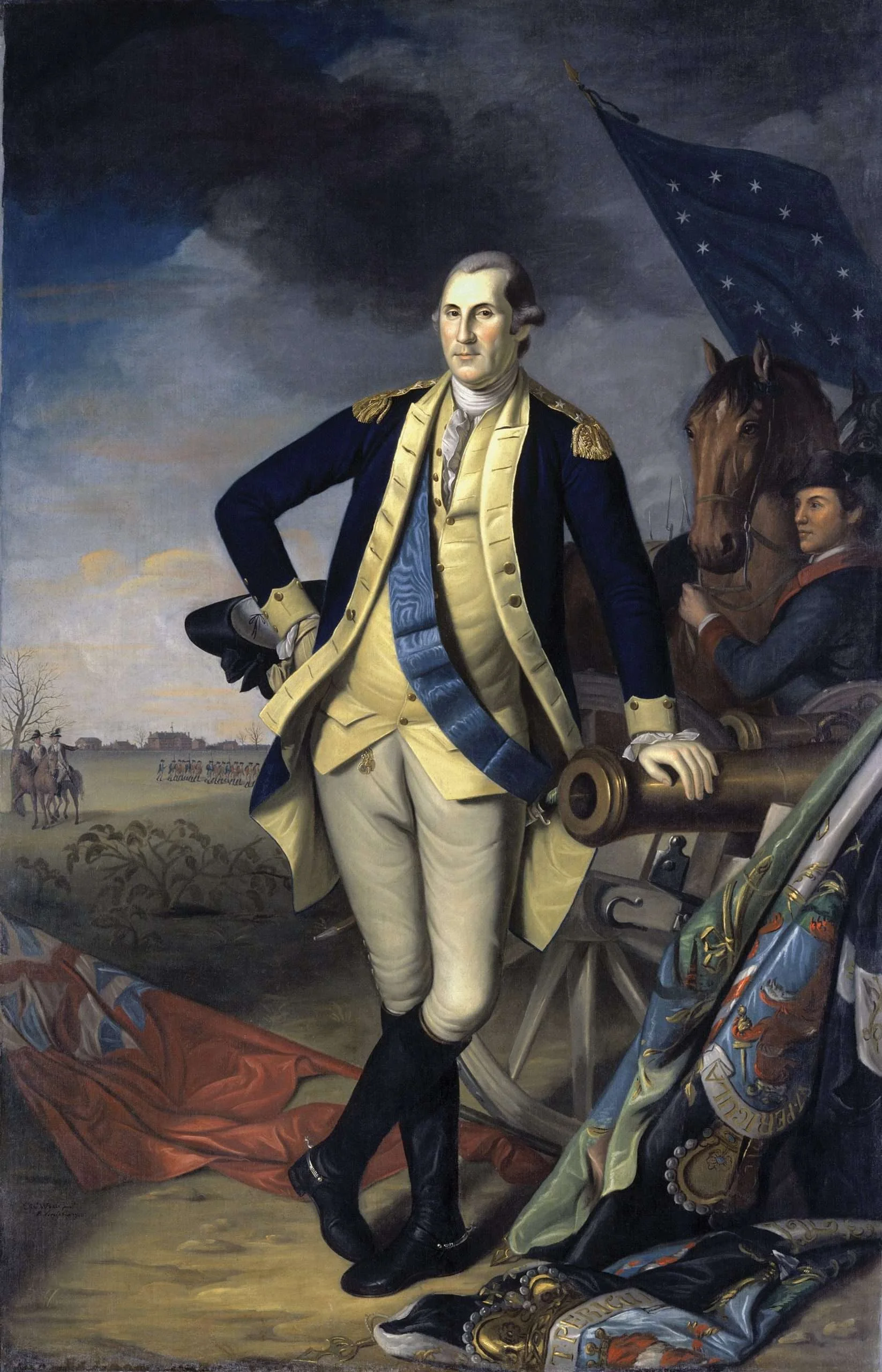
Continental General
George Washington
(1732-1799)
After General George Washington's (1732-1799) victories in the battles of Trenton and Princeton, Commander-in-Chief of the British Army, General William Howe (1729-1814), captures New York. Washington fears Philadelphia could be next. However, he is unsure if Howe will come by land or by sea. Howe believes that if he can capture the capital city of Philadelphia, he can cripple the American cause.
British General
William Howe
(1729-1814)
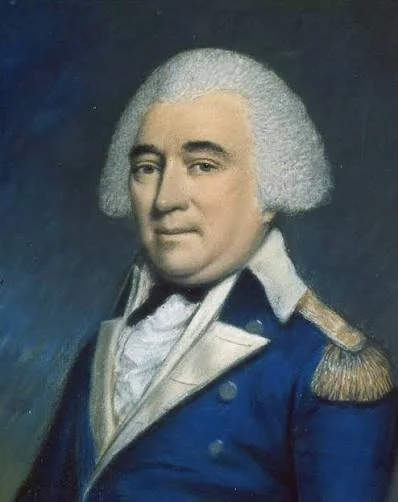
In early July 1777, inspector-general of ordnance and military engineering, Philippe Charles Tronson du Coudray (1738-1777), leads an inspection tour of the Delaware defenses. He is accompanied by members of the Pennsylvania Supreme Executive Council, the Board of War, and the Navy Board. The party consists of a trained civil engineer, General John Armstrong (1717-1795), David Rittenhouse (1732-1796†), and General Benedict Arnold (1741-1801). They inspect Fort Billingsport before inspecting Fort Mifflin and finish their tour at Fort Mercer.
Philippe Charles Tronson du Coudray
(1738-1777)
General John Armstrng (1717-1795)
David Rittenhouse
(1732-1796†)
General Benedict Arnold (1741-1801)
Arriving in Philadelphia on August 1, 1777, General Washington inspects Fort Billingsport, Fort Mercer, and Fort Mifflin before receiving word that the enemy fleet has been spotted off the Capes of Delaware. Upon his return to camp outside Germantown, he writes to Congress President John Hancock (1737-1793) comparing Fort Billingsport and Fort Mifflin. Washington favors Fort Mifflin because Fort Billingsport only has one row of chevaux-de-frise, where Fort Mifflin has three rows. He agrees with the strongest advocates of Fort Billingsport that it will not last a siege of more than 20 days.
John Hancock
(1737-1793)
But Howe changes course, and his fleet takes a longer route through the Chesapeake Bay. Howe believes that British Loyalists will be ready and waiting to join the fight with his army. When he arrives at Head of Elk, Maryland, on August 25th, he quickly realizes that he only has his troops to rely on and that the taking of Philadelphia will not be as simple as he planned.
British troops march quickly toward Philadelphia. As the Continental Army attempts to cut them off, they meet up at Brandywine on September 11, 1777. Among them is thirty-three-year-old African American Edward “Ned” Hector (1744- 1834), serving as a bombardier in Captain Hercules Courtenay's (1744-1784) company of the 3rd Pennsylvania Artillery. General Howe defeats Washington by outmaneuvering our troops. Howe moves his troops onward. Knowing that he failed to stop Howe at Brandywine, General Washington looks for another attempt to close the road to Philadelphia.
He finds it on September 16th, in the area of Whiteland Township and Goshen Township, near the Great Valley. While buying time to protect the approach to Philadelphia from Howe and his army, Washington attempts to position his army defensively. However, we are outnumbered 18,000 to 15, 000. Washington is vulnerable. He is at risk of being taken. All of a sudden, a higher power speaks up. A violent thunderstorm rushes in, ending the fighting. Flintlock muskets rely on dry gunpowder and priming pans to fire. Washington orders a retreat, avoiding a devastating defeat. This is not a complete loss. The storm causes roads to flood with mud, slowing the British down, allowing us to escape dilapidated, but intact. The monstrous thunderstorms define this moment, and this will be known as the Battle of The Clouds.
Edward “Ned” Hector
(1744- 1834)
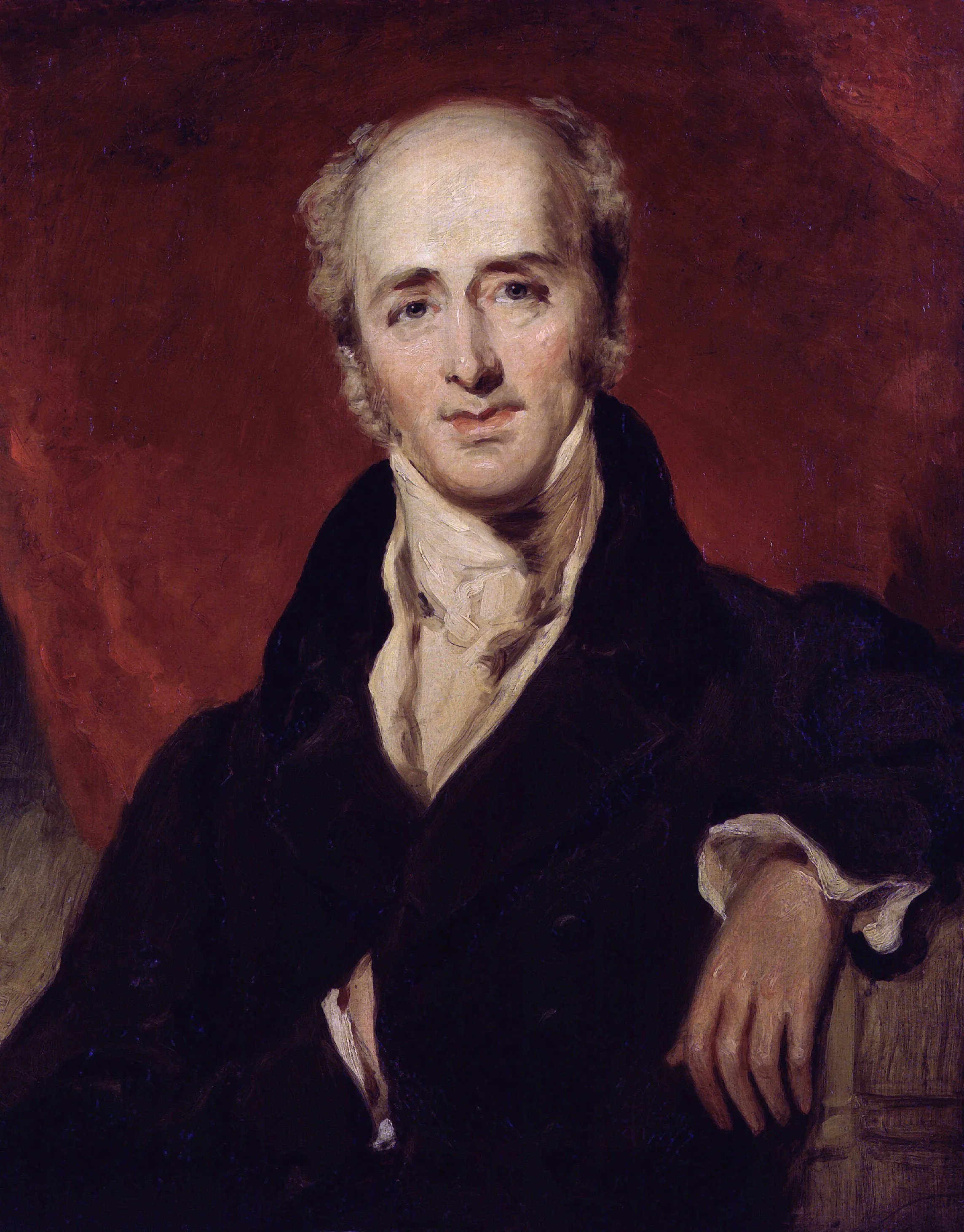
Following the close call of having another defeat, Washington orders General Anthony Wayne (1745-1796) to become a nuisance to the rear of the British movement to slow them down. When Wayne's position is discovered, Howe orders Major General Charles Grey (1729-1807) to eliminate Wayne and his squad. Grey plans a sneak attack. To ensure that their attack is not discovered, he orders his soldiers to remove the flints from their muskets to avoid any misfires. This earns him the nickname "No Flints Grey". With 1,200 Redcoats, they move towards the American Camp without a sound on the evening of September 20th.
General Anthony Wayne
(1745-1796)
General Charles Grey (1729-1807)
At 1 am on the morning of September 21st, the British begin their bayonet attack. The darkness and confusion leave us unable to organize a defense. In the close, chaotic ambush, we are attacked while sleeping, many are killed while trying to flee, and those of us trying to fight back are overwhelmed. American embellishments turn this into the Paoli Massacre.
With the path to Philadelphia now clear, General Howe marches his troops into Philadelphia and captures our capital city on September 26th.
At this time, our old friend, Benjamin Franklin, is serving as Commissioner to the Court of France. When a visitor delivers the news to him that Howe has taken Philadelphia, Franklin responds in a calm demeanor with a smile upon his face and quips, “I beg your pardon, sir. Philadelphia has taken Howe.”
As the battle draws closer and closer, American troops prepare Fort Mifflin for what is about to come. Under the command of Colonel Samuel Smith (1752–1839), barracks and defensive works are improved. Additional artillery is also mounted.
Colonel Samuel Smith
(1752–1839)
Although General Howe and his Redcoats march into Philadelphia without a fight, they are forced to remain in place while they wait for their supplies. With the Defense of the Delaware in place, they cannot receive needed supplies by port. They have no choice but to depend on supplies that are coming down from New York by way of long wagon routes.
By the first of October, the British engineers begin surveying the area. Planning attacks on Fort Billingsport, Fort Mercer, and Fort Mifflin, they construct batteries on Province Island to the West-northwest of Fort Mifflin.
As the British Navy travels up the Delaware River, attempting to get to the port of Philadelphia, the first line of defense they face is Fort Billingsport. Billingsport is not constructed with the strength that its teammates, Mercer and Mifflin, have been. It is a simple fort made of earthwork surrounding the small garrison mostly consisting of New Jersey militia, under the command of Colonel William Bradford. The same Bradford who prints The Pennsylvania Journal.
When faced with the reality that 1,500 British troops are marching on the fort, Bradford has to decide the fate of the fort and his men. He can order the garrison to defend the fort at all costs, but that would only end in the siege of the fort, the loss of his men, and the fort with all its artillery in the hands of the enemy. Instead, Bradford orders his militia to spike the cannons, delaying their use. His orders also include destroying supplies and burning all wooden structures, including the barracks, before evacuating by boat towards the remaining forts in the Delaware Defences. The British take control of Billingsport and begin dismantling the first line of chevaux-de-frise.
While the British navy is taking position on the Delaware, preparing to eliminate the obstacles that are between them and Philadelphia, the battles continue around the city.
General Howe sits in Philadelphia while he awaits the arrival of his British ships. General Washington decides to attack the British occupying Philadelphia in Germantown on October 4th.
Hoping to recreate the victory he had in Trenton, Washington leads 11,000 troops into Germantown for a sneak attack at dawn. Bombardier Ned Hector is present and ready for battle. Howe is surprised when American troops push several pickets back and begin capturing positions. With heavy fog covering the battlefield, communication becomes difficult. As units become separated, Continental officers such as Captain Nathan Stoddard (1742–1777), struggle to differentiate their own troops from the British and Hessian ones.
The Attack on Chew's House during the Battle of Germantown, 1777 by Edward Lamson Henry
The British are occupying the Cliveden estate. It's a large stone mansion. Instead of bypassing it, the Americans stop to attack it, delaying forward movement. The delay allows British forces to reorganize.
American officers are split on the decision to attack Cliveden. Some feel it should be bypassed to move toward the main British concentration, while others feel it is too dangerous to leave a strong enemy position behind them. British troops gain valuable time to recover and plan a counterattack while Americans are attacking the stone fortress of a house.
One of the houses commandeered by the British is John Wister's Big House. Built in 1744 by merchant and landowner John Wister (1708-1789) as his summer country estate. Though he is not a Loyalist, John remains at his home on Market Street despite the British occupation of Philadelphia. After the British take over Philadelphia, John's son, Daniel Wister (1738-1805), and his family flee to the Germantown home for safety. After being commandeered by the Red Coats, the house is used as a hospital following the engagement; the floor remains stained with blood from the battle to this day. Daniel's daughter, Sarah "Sally" Wister (1761-1804), keeps a journal of the events that play out during the Battle of Germantown. It is later published and seen as a well-respected source of the events from a civilian's firsthand account.
Private Joseph Plumb Martin
(1760-1850)
As the battle rages on, confusion among our troops, such as Private Joseph Plumb Martin (1760-1850), only increases. Units are losing contact with each other while other attacks fail to execute. As the British and Hessian soldiers regroup and counterattack, Washington realizes this is a losing battle. He orders a withdrawal, retreating back to Whitemarsh.
Although the battle is a loss for General Washington, it sends a clear message. It shows that the Continental Army is capable of launching a large-scale attack on the world's most powerful army. The battle proves to the French allies that the Revolution is still raging on. When Washington takes responsibility for the defeat, he shows his willingness to fight aggressively, maintaining confidence in him as a leader.
Major Simeon Thayer
(1737-1800)
The British who are attempting to push forward in the Delaware on October 9th are held in place between American artillery driving them back and the fear of hitting the chevaux-de-frise. This leads to British engineers expanding their batteries on Province Island. In addition to those, they also construct batteries on various riverbanks as well as on Caprenter's Island, northwest of Fort Mifflin.
On October 15th, British forces take the first shot and begin firing on Fort Mifflin. They are met with our effective fire in response. As the British increase their bombardment daily, the buildings inside the fort begin to suffer damage, and repairs are made each night. While British naval vessels advance closer to the island, Rhode Island reinforcements, including those under the command of Major Simeon Thayer (1737-1800) arrive on Mud Island to add strength to our exhausted defenders.
At dawn on the morning of October 22nd, Hessian Colonel Carl von Donop (1732–1777) marches his troops from Haddonfield, New Jersey, heading toward Red Bank. Unknowingly, General Washington lands on Mud Island to inspect the ramparts and the readiness of the garrison. After doing the same at Fort Mercer, he heads back to camp outside of Germantown.
British naval ships HMS Augusta and HMS Merlin are now in position, within range of Fort Mercer. Donop's men reach their destination at 1 p.m and are within musket range. They wait. At 4 p.m., Hessian officers approach the fort carrying a white flag, giving the ultimatum to surrender the fort or have it attacked. Commander of the American garrison, Colonel Christopher Greene (1737–1781), refuses to surrender.
With the demand firmly rejected, it is 4:30 pm when the German soldiers proceed to fire on the fort before attempting to storm it. Greene orders his men to hold their fire until they spot the belts on the Hessians, then shoot below them. Donop's men get through the sharpened wood obstacles known as abatis. They cross the ditches, and some even climb the parapet. Despite their attempts, the Hessians are unsuccessful in breaching Fort Mercer. After 40 minutes, the Hessians are forced to retreat.
Hessian Colonel
Carl von Donop
(1732–1777)
The Battle of Red Bank results in the deaths of 400 Hessians.
Colonel Carl von Donop is mortally wounded, captured, and surrendered. His injuries lead to his death two days later.
With the failure to capture Fort Mercer, the British focus their attention back to Fort Mifflin. They begin planning their formal siege operations. As they continue building up their position on Province Island with additional artillery, they are searching for a way to get past the chevaux-de-frise.
While the batteries are being built up on Province Island, our troops take note of the increasing British movements. The garrison at Fort Mifflin takes every opportunity to repair gun platforms and strengthen damaged walls.
As artillery is added to the British positions, they begin to test their range with light firing, which we answer swiftly.
Shortly after, reinforcements arrive from Germantown to strengthen the garrison. Among these men is 17-year-old Private Joseph Plum Martin. He describes the island as "noting more than a mud flat in the Delaware". The private arrives without shoes or stockings to keep him warm in the cold conditions.
After difficult navigation, British naval ships are able to get past portions of the chevaux-de-frise, allowing HMS Augusta and HMS Merlin to add to the bombardment. After Merlin becomes stranded, it is abandoned and deliberately burned by the crew to avoid being captured. Adding to the British bad luck, the Augusta also runs aground.
There are cannonballs that are heated in a special furnace until they are glowing red, and then fired. These are known as a heated shot or a hot shot. The ball not only destroys the wooden structure, but it also sets fire to it.
On the morning of October 23rd, we wake to discover that Augusta is stuck. At 11 a.m., we begin firing hot shots from the southern tip of Fort Mifflin, landing on the Augusta. A fire breaks out near the stern of the ship. Spreading quickly, it reaches the powder magazine. At 2 p.m., the Augusta explodes, shattering windows in Philadelphia. It is loud enough to be heard thirty miles away in Trappe, Pennsylvania. Martin describes it as "an explosion which seemed to shake the earth to its center, leaving a volume of smoke like a thundercloud, which, as the air was calm, remained an hour or two." In a letter to Benjamin Franklin, Thomas Paine (1737-1809) describes the sound as "like the peal of a hundred cannon at once". Thirty minutes after the August explosion, the Merlin follows suit.
NH 92863-KN Destruction of HMS AUGUSTA in the Delaware River, 23 October 1777 was painted by an unidentified British naval officer
Now that the British suffer a major loss of the two naval ships designated to lead the charge of taking back the Delaware, Continental morale is high.
As the calendar rolls from October into November, the British engineers continue to improve their batteries. Under enemy fire, Fort Mifflin suffers the destruction of various wooden structures, storehouses, barracks, and interior defenses.
The British compile an overwhelming artillery of mortars, howitzers, naval guns, and heavy cannon. On November 10th, they begin their largest assault yet. Projectiles hit the fort each day by the hundreds. Private Martin describes the parade ground in the center of the fort as soft mud. Some of the shells fired into the fort sink so low in the mud that "their report could not be heard when they burst, and I could only feel a tremulous motion of the earth". When they burst near the surface of the muddy grounds, they throw mud fifty feet in the air. If the soldiers are not killed or wounded, they are exhausted.
The following day, November 11th, Colonel Smith is wounded and exits Fort Mifflin. Major Thayer takes over his command. Upon his arrival, engineer Captain François Louis Teissèdre de Fleury (1749-1799) is shocked at the condition the fort is in. He keeps troops busy day and night with repairs.
Captain François Louis
Teissèdre de Fleury
(1749-1799)
Our men are severely fatigued. Lying down on the ground is not an option on account of the mud, not to mention the British ammunition raining down on the fort. The troops that slip off into the barracks for a quick nap hardly ever come out alive.
By this time, the one thirty-two-pound cannon in the fort has no ammunition for it, making it useless. Artillery officers offer us a gill of rum for every thirty-two-pound ball fired by the enemy and retrieved. Desperate soldiers, twenty to fifty at a time, stand around the parade ground, waiting impatiently. When the ammunition comes, it is seized sometimes before it even stops moving. It is then loaded into our guns, and sent back to the British. After consuming the prized rum as quickly as we can, we return to the parade ground to wait for more.
Fort Mifflin Volunteer, Connor Duffy’s maps show the British positions on a modern map.
On the morning of November 14th, Fort Mifflin is no longer a fully functioning fort. At dawn, the Continental soldiers find British ships within pistol distance of the fort along the western side. Six sixty-four-gun ships, a thirty-six-gun frigate, a twenty-four-gun ship, a six-gun galley, a six-gun sloop, six six-gun batteries, and a three-mortar bomb battery. All waiting to fire on our fort made of dirt and earthworks.
Desperately firing our batteries at them, the British barely notice. The soldiers mistakenly heat twenty-four-pound cannonballs instead of the eighteen-pounders that we need for the guns on this side of the fort. As the British begin firing on us, we believe that they will land and attempt to storm the fort. As a countermeasure, we are ordered to take positions at the palisados, and hold them as long as we can.
When the firing begins, it is heavy. Officers who are trying to determine the number of guns fired per minute soon find the task impossible as the firing is constant.
On November 15th, the enemy fire is at its heaviest. The only safe place is along the eastern wall of the fort, hidden behind the stone walls. When the British discover this, they begin to load elevated grapeshot into their mortar. Despite our sentries calling out a warning, the men do not spot the approaching ammunition and let their guards down, only to let the grapeshot rain down on them from above.
The Sufferers of Mud Island by Silas Ainsley
As our gunpowder runs low, it is evident that soon we will no longer be able to fire at the enemy. Major Thayer wants to raise a distress signal. De Fleury talks him out of it, explaining that doing so would show the enemy that we are weak. He suggests that we leave our flag flying until nightfall. De Fleury then manages to get a 32 -pound cannon back in working order along with an 18-pound cannon. After a piece of falling timber strikes the engineer, leaving him dazed, Thayer's decision is made. He orders a distress flag to be raised, requesting assistance from batteries above the fort.
After the orders are given to raise the distress signal flag, officers ask for volunteers to switch the flag. Sgt Andrew Makemson (1753-1777) accepts the challenge. He climbs the mast of the flagpole, lowers our flag, and replaces it with a distress flag. The British foolishly believe that we are surrendering and cease fire. When our officers chant "UP WITH THE FLAG", Makemson lowers the distress flag and replaces it with our flag once again before descending back down the mast to rejoin his men. Martain recalls that the sergeant gets approximately eight feet from the flagpole before he is "cut in two by a cannon shot". Makemson's brother, who is second in command, Lt. James Makemson (1741-1777), is also killed while trying to keep our flag flying.
After loading one of the cannons, Captain Nathan Stoddard is sighting the enemy with the loaded gun. All of a sudden, a cannon rips his head clean from his body. His body remains standing motionless before falling to the mud.
The fort has been reduced to rubble. Our buildings once stood tall and served as shelter, not only from the enemy fire but from the natural elements as well. Now, there are piles and piles of rubble providing little to no protection. Men attempt to stoop low to be spared from the British fire. Those who do not stoop low enough are hit with the enemy's ammunition and split like fish to be broiled.
In the late hours of the night, most guns in the fort have been disabled and the powder depleted. Major Thayer orders the evacuation of the fort. The remaining garrison begins to evacuate under dark skies; the good major stays behind with a group of forty Continentals. The final order given is to set fire to the remaining buildings and destroy any structures and materials before the fort is in the enemy's hands by morning.
As the midnight hour passes into the following day, and those forty men board the final boat leaving for Fort Mercer, Major Simeon Thayer is the last one to take his foot off of Mud Island. While they row across the Delaware, our flag still waves proudly in the wind. That deliberate act is a symbol of a major distinction. With the waving of the Fort Mifflin Flag, we declare proudly in a loud united voice that we may have abandoned the fort, but we never surrendered.
The Evacuation of Fort Mifflin by Silas Ainsley
The Huts of Valley Forge by Keith J. Fisher
The British report this as a win, that our plan to block the supply lines fails. For us Patriots, this was far from a failure. Little do they know that we delay them just long enough that we buy General Washington enough time to march his troops into Valley Forge. Private Joseph Plum Martin meets the Continental Army in Valley Forge, where they face a brutal winter. However, it is there that our army will be properly trained.
We will continue fighting against the tyranny of the crown, and almost four years later, British Lieutenant General Charles Cornwallis (1738-1805) surrenders to General George Washington on October 19, 1781. The war is over. We win the Revolution and become an independent nation. We are now recognized as the United States of America.
If it were not for the bravery of our Continental soldiers at Fort Mifflin, who hold those British supply lines back, they would have come right into Philadelphia, defeated our army, and we would all be British subjects today.
The entire engagement of the Siege of Fort Mifflin lasts six weeks from September 26th to November 16th. There are Continental soldiers, artillerymen, engineers, and militia constantly rotating in and out of the fort. As one reinforcement arrives, men are shuffled out of the fort to the mainland for rest. More than that, there are additional troops, sailors, boat crews, artificers, and other personnel who are supporting Fort Mifflin from defense positions surrounding the Delaware River. Due to the constant rotation, the number of Americans who have a hand in the defense of the fort, over the course of the siege, is far greater than the number of defenders at any one time. For the sacrifice they make for our freedom, it is important that we remember all of them. While it is impossible to accurately list each individual, I'd like to remember the names that I have discovered while researching this story.
Captain François Louis Teissèdre de Fleury (1749-1799)
Private Jacob Huber (1756-1849)
Sergeant Andrew Makemson (1753-1777)
Lieutenant James Makemson (1741-1777)
Private Joseph Plumb Martin (1760-1850)
Colonel Samuel Smith (1752-1839)
Captain Nathan Stoddard (1742-1777)
Major Simeon Thayer (1737-1800)
The tragedy is that Fort Mifflin is not taught more in our schools, and that most people have never heard of it, when it played such a pivotal role in fighting for our freedom.
Of the three forts that were part of the Defense of the Delaware, Fort Mifflin is the only one that still stands today. Each year on the weekend closest to the anniversary, Fort Mifflin holds its annual Siege Weekend Renactment. Men, women, and even children camp out wherever they can find room, just so they can pay homage to the brave souls that sometimes still linger on this sacred battleground. As a visitor, when you step through the gates of Fort Mifflin on Siege Weekend, you step back in time to the eighteenth century. It is often asked if there are still spirits there. There are spirits that linger and spirits that are consumed. However, nothing speaks to the soul as much as the sound, the feel, and the smell of musket fire.
If you are one of the unfortunates who have never been to this amazing hidden treasure, I highly recommend you experience Fort Mifflin.
This year, Siege Weekend will be held on Saturday, November 14th, and Sunday, November 15th. Be sure to tell them you read this article, and I hope to meet you there!
Sources:
PRIMARY SOURCES
1. F̲o̲r̲t̲ M̲i̲f̲f̲l̲i̲n̲ o̲n̲ t̲h̲e̲ D̲e̲l̲a̲w̲a̲r̲e̲
Article Title: The History
Author: Fort Mifflin on the Delaware
Website Title: Fort Mifflin on the Delaware
Publication Date: Not stated
Volume and Issue: Not applicable
Page Numbers: Not applicable
URL: https://www.fortmifflin.us/
2. F̲o̲u̲n̲d̲e̲r̲s̲ O̲n̲l̲i̲n̲e̲ — N̲a̲t̲i̲o̲n̲a̲l̲ A̲r̲c̲h̲i̲v̲e̲s̲
Article Title: Plain Truth, 17 November 1747
Author: Benjamin Franklin
Website Title: Founders Online
Publication Date: November 17, 1747
Volume and Issue: Not applicable
Page Numbers: 180–204 in The Papers of Benjamin Franklin, Vol. 3
URL: https://founders.archives.gov/documents/Franklin/01-03-02-0091
3. F̲o̲u̲n̲d̲e̲r̲s̲ O̲n̲l̲i̲n̲e̲ — N̲a̲t̲i̲o̲n̲a̲l̲ A̲r̲c̲h̲i̲v̲e̲s̲
Article Title: Extracts from the Gazette, 1747
Author: Benjamin Franklin
Website Title: Founders Online
Publication Date: 1747
Volume and Issue: Not applicable
Page Numbers: 231–242 in The Papers of Benjamin Franklin, Vol. 3
URL: https://founders.archives.gov/documents/Franklin/01-03-02-0102
4. F̲o̲u̲n̲d̲e̲r̲s̲ O̲n̲l̲i̲n̲e̲ — N̲a̲t̲i̲o̲n̲a̲l̲ A̲r̲c̲h̲i̲v̲e̲s̲
Article Title: George Washington Papers, Series 4, General Correspondence
Author: George Washington
Website Title: Founders Online
Publication Date: 1777
Volume and Issue: Not applicable
Page Numbers: Not stated
URL: https://founders.archives.gov/documents/Washington/03-10-02-0535-0002
5. F̲o̲u̲n̲d̲e̲r̲s̲ O̲n̲l̲i̲n̲e̲ — N̲a̲t̲i̲o̲n̲a̲l̲ A̲r̲c̲h̲i̲v̲e̲s̲
Article Title: George Washington Papers, Series 4, General Correspondence
Author: George Washington
Website Title: Founders Online
Publication Date: 1777
Volume and Issue: Not applicable
Page Numbers: Not stated
URL: https://founders.archives.gov/documents/Washington/03-10-02-0564
6. T̲h̲e̲ H̲i̲s̲t̲o̲r̲y̲ C̲a̲r̲p̲e̲r̲
Article Title: Siege of Fort Mifflin
Author: Frank Moore
Website Title: The History Carper
Publication Date: December 5, 1777; republished June 26, 2024
Volume and Issue: Not applicable
Page Numbers: Not applicable
URL: https://historycarper.com/1777/12/05/siege-of-fort-mifflin/
GOVERNMENT, MILITARY & ARCHAEOLOGICAL PUBLICATIONS
7. U̲.̲S̲.̲ G̲o̲v̲e̲r̲n̲m̲e̲n̲t̲ P̲u̲b̲l̲i̲s̲h̲i̲n̲g̲ O̲f̲f̲i̲c̲e̲
Article Title: Government Publication — Fort Mifflin
Author: U.S. Government
Website Title: GovInfo
Publication Date: Not stated
Volume and Issue: Not applicable
Page Numbers: Not stated
URL: https://www.govinfo.gov/content/pkg/GOVPUB-D103-PURL-gpo248325/pdf/GOVPUB-D103-PURL-gpo248325.pdf
8. U̲.̲S̲.̲ A̲r̲m̲y̲ C̲o̲r̲p̲s̲ o̲f̲ E̲n̲g̲i̲n̲e̲e̲r̲s̲
Article Title: Engineer Pamphlet EP 870-1-6
Author: U.S. Army Corps of Engineers
Website Title: U.S. Army Corps of Engineers Publications
Publication Date: Not stated
Volume and Issue: Not applicable
Page Numbers: Not stated
URL: https://www.publications.usace.army.mil/Portals/76/Publications/EngineerPamphlets/EP_870-1-6.pdf
9. U̲.̲S̲.̲ A̲r̲m̲y̲ C̲e̲n̲t̲e̲r̲ o̲f̲ M̲i̲l̲i̲t̲a̲r̲y̲ H̲i̲s̲t̲o̲r̲y̲
Article Title: The Eastman Forts
Author: U.S. Army Center of Military History
Website Title: U.S. Army Center of Military History
Publication Date: Not stated
Volume and Issue: Not applicable
Page Numbers: Not stated
URL: https://history.army.mil/Publications/Publications-Catalog/The-Eastman-Forts/
The Army’s page specifically includes a section on Fort Mifflin and identifies the fort as dating to 1771.
10. U̲R̲S̲ C̲o̲r̲p̲o̲r̲a̲t̲i̲o̲n̲
Article Title: Archaeological Investigations of Revolutionary War Fort Billingsport
Author: Douglas B. Mooney and Ingrid Wuebber
Website Title: Archaeological Investigations of Revolutionary War Fort Billingsport
Publication Date: May 2009
Volume and Issue: Not applicable
Page Numbers: 135 pages
URL: https://paulsboronj.org/wp-content/uploads/2018/12/5.15.09_Draft_Ft._Billingsport_Report.pdf
BOOKS
11. J̲o̲s̲e̲p̲h̲ P̲l̲u̲m̲b̲ M̲a̲r̲t̲i̲n̲
Book Title: The Adventures of a Revolutionary Soldier
Author: Joseph Plumb Martin
Website Title: Not applicable — Book
Publication Date: Originally published 1830
Volume and Issue: Not applicable
Page Numbers: Edition-dependent
URL: Not provided
12. R̲o̲b̲i̲n̲ M̲c̲K̲o̲w̲n̲
Book Title: Benjamin Franklin
Author: Robin McKown
Website Title: Not applicable — Book
Publication Date: Not stated
Volume and Issue: Not applicable
Page Numbers: Edition-dependent
URL: Not provided
SCHOLARLY & INSTITUTIONAL SOURCES
13. E̲n̲c̲y̲c̲l̲o̲p̲e̲d̲i̲a̲ o̲f̲ G̲r̲e̲a̲t̲e̲r̲ P̲h̲i̲l̲a̲d̲e̲l̲p̲h̲i̲a̲
Article Title: Philadelphia Campaign
Author: Jennifer Lawrence Janofsky
Website Title: Encyclopedia of Greater Philadelphia
Publication Date: 2015
Volume and Issue: Not applicable
Page Numbers: Not applicable
URL: https://philadelphiaencyclopedia.org/essays/philadelphia-campaign/
14. E̲n̲c̲y̲c̲l̲o̲p̲e̲d̲i̲a̲ o̲f̲ G̲r̲e̲a̲t̲e̲r̲ P̲h̲i̲l̲a̲d̲e̲l̲p̲h̲i̲a̲
Article Title: Printing and Publishing
Author: James J. Wyatt
Website Title: Encyclopedia of Greater Philadelphia
Publication Date: Not stated
Volume and Issue: Not applicable
Page Numbers: Not applicable
URL: https://philadelphiaencyclopedia.org/essays/printing-and-publishing/
15. E̲n̲c̲y̲c̲l̲o̲p̲e̲d̲i̲a̲ o̲f̲ G̲r̲e̲a̲t̲e̲r̲ P̲h̲i̲l̲a̲d̲e̲l̲p̲h̲i̲a̲
Article Title: Coffeehouses
Author: Not stated
Website Title: Encyclopedia of Greater Philadelphia
Publication Date: Not stated
Volume and Issue: Not applicable
Page Numbers: Not applicable
URL: https://philadelphiaencyclopedia.org/essays/coffeehouses/
16. C̲a̲r̲p̲e̲n̲t̲e̲r̲s̲’̲ C̲o̲m̲p̲a̲n̲y̲ o̲f̲ t̲h̲e̲ C̲i̲t̲y̲ a̲n̲d̲ C̲o̲u̲n̲t̲y̲ o̲f̲ P̲h̲i̲l̲a̲d̲e̲l̲p̲h̲i̲a̲
Article Title: The Battle for Philadelphia
Author: Carl G. Karsch
Website Title: Carpenters’ Company of the City and County of Philadelphia
Publication Date: Not stated
Volume and Issue: Not applicable
Page Numbers: Not applicable
URL: https://www.carpentershall.org/pages/the-battle-for-philadelphia
17. C̲h̲r̲i̲s̲t̲i̲a̲n̲ M̲c̲B̲u̲r̲n̲e̲y̲
Article Title: A Rhode Island Officer’s Recollections Lead to New Information on Battle of Red Bank
Author: Christian McBurney
Website Title: Online Review of Rhode Island History
Publication Date: April 18, 2025
Volume and Issue: Not applicable
Page Numbers: Not applicable
URL: https://smallstatebighistory.com/a-rhode-island-officers-recollections-lead-to-new-information-on-battle-of-red-bank/
18. B̲a̲t̲t̲l̲e̲ o̲f̲ R̲h̲o̲d̲e̲ I̲s̲l̲a̲n̲d̲
Article Title: New Information on Battle of Red Bank
Author: Christian McBurney
Website Title: Battle of Rhode Island
Publication Date: Not stated
Volume and Issue: Not applicable
Page Numbers: Not applicable
URL: https://battleofrhodeisland.org/new-information-on-battle-of-red-bank/
19. T̲h̲e̲ A̲n̲g̲r̲y̲ S̲t̲a̲f̲f̲ O̲f̲f̲i̲c̲e̲r̲
Article Title: Francois de Fleury: the Most Badass Engineer of the American Revolution
Author: Angry Staff Officer
Website Title: The Angry Staff Officer
Publication Date: June 10, 2021
Volume and Issue: Not applicable
Page Numbers: Not applicable
URL: https://angrystaffofficer.com/2021/06/10/francois-de-fleury-the-most-badass-engineer-of-the-american-revolution/
20. S̲O̲F̲R̲E̲P̲
Article Title: Three Disastrous Ship Explosions in US History
Author: SOFREP News Team
Website Title: SOFREP
Publication Date: April 10, 2022
Volume and Issue: Not applicable
Page Numbers: Not applicable
URL: https://sofrep.com/news/three-disastrous-ship-explosions-in-us-history/
21. W̲e̲s̲t̲ J̲e̲r̲s̲e̲y̲ H̲i̲s̲t̲o̲r̲y̲
Article Title: Chapter 6
Author: Not stated
Website Title: WestJersey.org
Publication Date: Not stated
Volume and Issue: Not applicable
Page Numbers: Not stated
URL: https://westjersey.org/sjh/sjh_chap_6.htm
22. U̲S̲H̲i̲s̲t̲o̲r̲y̲.̲o̲r̲g̲
Article Title: The Philadelphia Campaign — Head of Elk
Author: Not stated
Website Title: USHistory.org
Publication Date: Not stated
Volume and Issue: Not applicable
Page Numbers: Not applicable
URL: https://www.ushistory.org/march/phila/elk.htm
23. A̲m̲e̲r̲i̲c̲a̲n̲ H̲i̲s̲t̲o̲r̲y̲ C̲e̲n̲t̲r̲a̲l̲
Article Title: Battle of the Clouds, 1777
Author: Not stated
Website Title: American History Central
Publication Date: Not stated
Volume and Issue: Not applicable
Page Numbers: Not applicable
URL: https://www.americanhistorycentral.com/entries/battle-of-the-clouds-1777/
24. W̲a̲n̲d̲e̲r̲i̲n̲g̲ T̲h̲r̲o̲u̲g̲h̲ T̲i̲m̲e̲ a̲n̲d̲ P̲l̲a̲c̲e̲
Article Title: Andrew and James Mekemson
Author: Not stated
Website Title: Wandering Through Time and Place
Publication Date: Not stated
Volume and Issue: Not applicable
Page Numbers: Not applicable
URL: https://wandering-through-time-and-place.com/tag/andrew-and-james-mekemson/
25. L̲a̲u̲r̲i̲e̲ S̲a̲n̲f̲o̲r̲d̲
Article Title: My Revolutionary War Ancestor
Author: Laurie Sanford
Website Title: Laurie Sanford
Publication Date: April 7, 2014
Volume and Issue: Not applicable
Page Numbers: Not applicable
URL: https://lauriesanford.wordpress.com/2014/04/07/my-revolutionary-war-ancestor/
GENEALOGICAL SOURCES
26. F̲a̲m̲i̲l̲y̲S̲e̲a̲r̲c̲h̲
Article Title: Family Tree — Person Record K819-Y1V
Author: FamilySearch
Website Title: FamilySearch
Publication Date: Not stated
Volume and Issue: Not applicable
Page Numbers: Not applicable
URL: https://www.familysearch.org/en/tree/person/details/K819-Y1V
27. F̲a̲m̲i̲l̲y̲S̲e̲a̲r̲c̲h̲
Article Title: Family Tree — Person Record KXB7-VHV
Author: FamilySearch
Website Title: FamilySearch
Publication Date: Not stated
Volume and Issue: Not applicable
Page Numbers: Not applicable
URL: https://www.familysearch.org/en/tree/person/details/KXB7-VHV
28. A̲m̲e̲r̲i̲c̲a̲n̲ A̲r̲i̲s̲t̲o̲c̲r̲a̲c̲y̲
Article Title: Daniel Wister (1738–1805)
Author: Not stated
Website Title: American Aristocracy
Publication Date: Not stated
Volume and Issue: Not applicable
Page Numbers: Not applicable
URL: https://americanaristocracy.com/people/daniel-wister
LIBRARY & ARCHIVAL CATALOG RECORDS
29. F̲o̲l̲g̲e̲r̲ S̲h̲a̲k̲e̲s̲p̲e̲a̲r̲e̲ L̲i̲b̲r̲a̲r̲y̲
Article Title: Catalog Record 726029
Author: Folger Shakespeare Library
Website Title: Folger Shakespeare Library Catalog
Publication Date: Not stated
Volume and Issue: Not applicable
Page Numbers: Not applicable
URL: https://catalog.folger.edu/record/726029
30. L̲i̲b̲r̲a̲r̲y̲ o̲f̲ C̲o̲n̲g̲r̲e̲s̲s̲
Article Title: The Pennsylvania Journal, or, Weekly Advertiser
Author: William and Thomas Bradford / Pennsylvania Journal
Website Title: Chronicling America, Library of Congress
Publication Date: 1742–1793
Volume and Issue: Individual issues vary
Page Numbers: Individual issues vary
URL: https://www.loc.gov/item/sn85047530/
31. N̲a̲t̲i̲o̲n̲a̲l̲ A̲r̲c̲h̲i̲v̲e̲s̲
Article Title: National Archives
Author: National Archives and Records Administration
Website Title: National Archives
Publication Date: Not applicable
Volume and Issue: Not applicable
Page Numbers: Not applicable
URL: https://www.archives.gov/
REFERENCE SOURCES
32. W̲i̲k̲i̲p̲e̲d̲i̲a̲
Article Title: Fort Mifflin
Author: Wikipedia contributors
Website Title: Wikipedia
Publication Date: Not stated
Volume and Issue: Not applicable
Page Numbers: Not applicable
URL: https://en.wikipedia.org/wiki/Fort_Mifflin
33. W̲i̲k̲i̲p̲e̲d̲i̲a̲
Article Title: Battle of the Clouds
Author: Wikipedia contributors
Website Title: Wikipedia
Publication Date: Not stated
Volume and Issue: Not applicable
Page Numbers: Not applicable
URL: https://en.wikipedia.org/wiki/Battle_of_the_Clouds
34. W̲i̲k̲i̲p̲e̲d̲i̲a̲
Article Title: Cheval de frise
Author: Wikipedia contributors
Website Title: Wikipedia
Publication Date: Not stated
Volume and Issue: Not applicable
Page Numbers: Not applicable
URL: https://en.wikipedia.org/wiki/Cheval_de_frise
35. W̲i̲k̲i̲p̲e̲d̲i̲a̲
Article Title: Carpenters’ Hall
Author: Wikipedia contributors
Website Title: Wikipedia
Publication Date: Not stated
Volume and Issue: Not applicable
Page Numbers: Not applicable
URL: https://en.wikipedia.org/wiki/Carpenters'_Hall
36. W̲i̲k̲i̲p̲e̲d̲i̲a̲
Article Title: William Bradford (printer, born 1719)
Author: Wikipedia contributors
Website Title: Wikipedia
Publication Date: Not stated
Volume and Issue: Not applicable
Page Numbers: Not applicable
URL: https://en.wikipedia.org/wiki/William_Bradford_%28printer%2C_born_1719%29
37. G̲r̲o̲k̲i̲p̲e̲d̲i̲a̲
Article Title: HMS Augusta
Author: Not stated
Website Title: Grokipedia
Publication Date: Not stated
Volume and Issue: Not applicable
Page Numbers: Not applicable
URL: https://grokipedia.com/page/hms_augusta
38. C̲i̲v̲i̲l̲ W̲a̲r̲ T̲h̲o̲s̲e̲ S̲u̲r̲n̲a̲m̲e̲s̲
Article Title: Nathan Stoddard or Stoodard
Author: Not stated
Website Title: Civil War Those Surnames
Publication Date: June 2010
Volume and Issue: Not applicable
Page Numbers: Not applicable
URL: https://civilwarthosesurnames.blogspot.com/2010/06/nathan-stoddard-or-stoodard.html
39. P̲e̲n̲n̲s̲y̲l̲v̲a̲n̲i̲a̲ M̲a̲g̲a̲z̲i̲n̲e̲ o̲f̲ H̲i̲s̲t̲o̲r̲y̲ a̲n̲d̲ B̲i̲o̲g̲r̲a̲p̲h̲y̲
Article Title: The Pennsylvania Magazine of History and Biography
Author: Various
Website Title: Pennsylvania Magazine of History and Biography
Publication Date: Not stated
Volume and Issue: Not stated
Page Numbers: Not stated
URL: https://upload.wikimedia.org/wikipedia/commons/4/40/The_Pennsylvania_magazine_of_history_and_biography_%28IA_pennsylvaniamaga4188unse%29.pdf